Who Owns Rolls-Royce Car Company? Ownership, Heritage, Future
Ahmed Salem••10 min read
💡 Quick Answer: The Rolls-Royce Motor Cars you rent in Dubai belong entirely to Germany's BMW Group, which bought the naming rights in 1998 and has built every car at Goodwood, England since 2003. This is a completely different company from Rolls-Royce Holdings plc, the British jet-engine maker on the London Stock Exchange — the two have not shared an owner since 1973. BMW has committed to an all-electric Rolls-Royce line-up, already visible in Dubai as the Spectre, from AED 7,500/day. Rentals across the current fleet start at AED 3,800/day (Ghost). WhatsApp +971 56 150 3674.
🛎️ From Our Dubai Concierge Operations
The fleet we maintain at Naqra FZE — Phantom, Ghost, Cullinan, Dawn, Wraith, and the fully electric Spectre — is entirely a product of the Goodwood era: every car built under BMW's ownership, to the exacting standard the marque has held since 2003. We deliver anywhere across Downtown Dubai, Palm Jumeirah, Dubai Marina, DIFC, and both DXB and DWC airports, with a chauffeur briefed on the car's history should you ask — and most of our guests eventually do.
Two Companies, One Name, and a Split Nobody Remembers Correctly
Ask ten people who owns Rolls-Royce and at least three will confidently tell you it is an aerospace company that also, somehow, makes cars. They are not wrong so much as fifty years out of date. The Rolls-Royce that built the jet engines powering half the world's wide-body aircraft and the Rolls-Royce that will deliver a Cullinan to your villa in Emirates Hills tonight have not been on speaking terms, corporately, since 1973. One is a Rolls-Royce. The other is also a Rolls-Royce. Untangling which is which is less a history lesson than a small act of consumer self-defence — and it happens to be a rather good story.
1904–1971: When There Was Only One Rolls-Royce
The company began in a Manchester workshop in 1904, when Charles Rolls — an aristocrat with a taste for speed and, eventually, aeroplanes — agreed to sell every car Henry Royce could build. Royce, a self-taught engineer with no patience for anything imprecise, had already built three cars that ran better than anything on the road. The arrangement worked because each man supplied what the other lacked: Rolls had the clientele, Royce had the obsession. By 1906 the company carried both their names, and by 1907 the Silver Ghost had already earned the nickname 'the best car in the world' — a claim nobody at the company felt any need to shout about, since it was, by then, simply understood. Aero-engine work followed during the First World War, and by the 1960s the aircraft division had grown into the larger business, quietly dwarfing the cars that had made the name famous in the first place.
1971: The Year the Name Split Down the Middle
The split was not a boardroom decision made for tidiness. It was a bankruptcy. The RB211 engine programme — an ambitious turbofan developed for Lockheed's TriStar — ran so far over budget that Rolls-Royce Limited collapsed into receivership in February 1971, forcing the British government to nationalise the aero-engine business to keep it alive. The motor car division, considered the healthier and more saleable asset, was spun out as a separate company, Rolls-Royce Motors, in 1973. Read the fuller ownership timeline if the sequence of dates interests you as much as it interests us. From that date forward, two companies have carried the name, answered to different shareholders, and built entirely different machines — one for the sky, one for Sheikh Zayed Road. Rolls-Royce Holdings plc, descended from that nationalised aero business, remains listed on the London Stock Exchange today and has never owned a single motor car showroom.
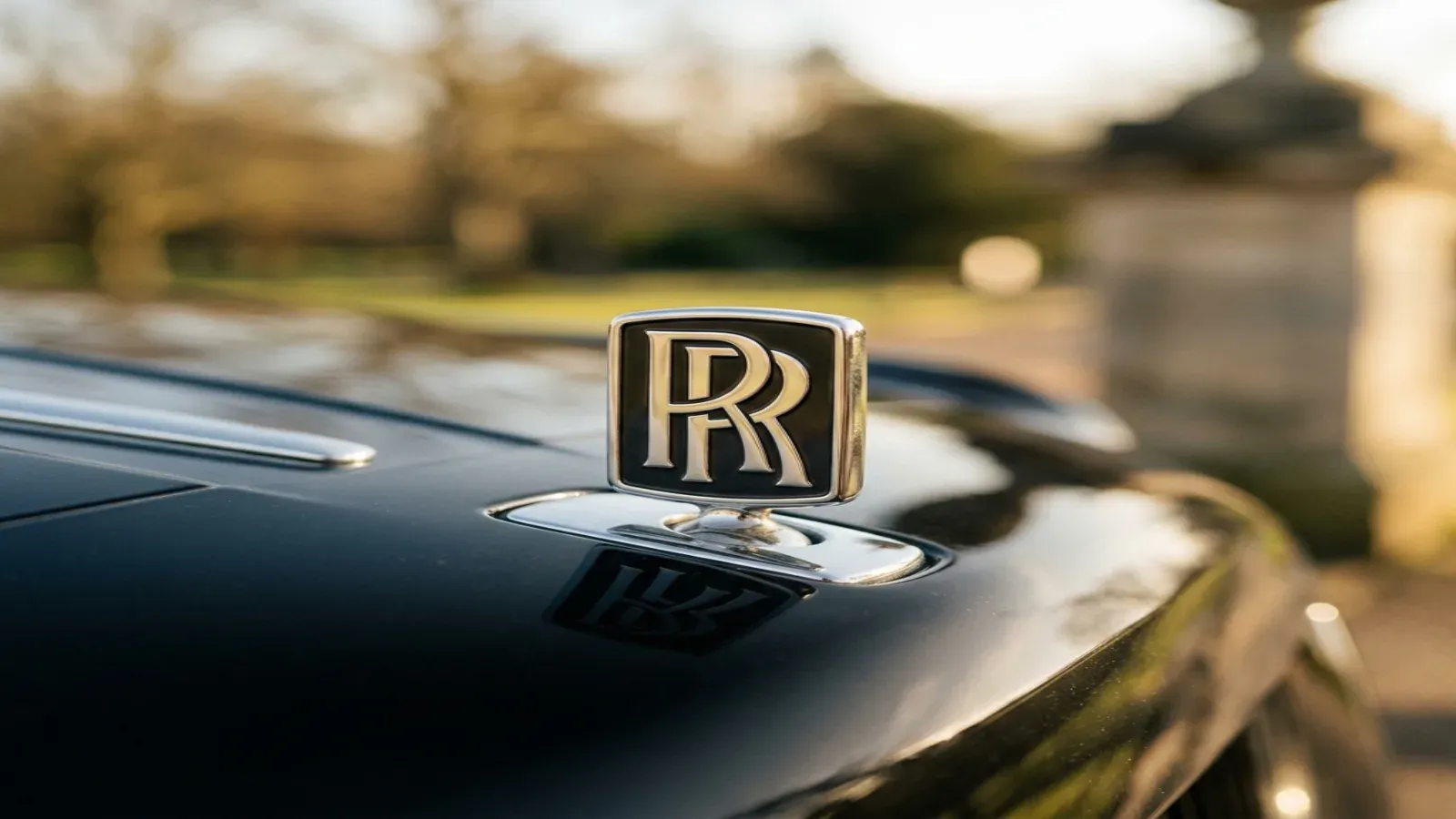
The double-R monogram on a modern Ghost — the badge survived the split; the ownership did not.
1998: The Auction That Handed Bentley to One German Company and Rolls-Royce to Another
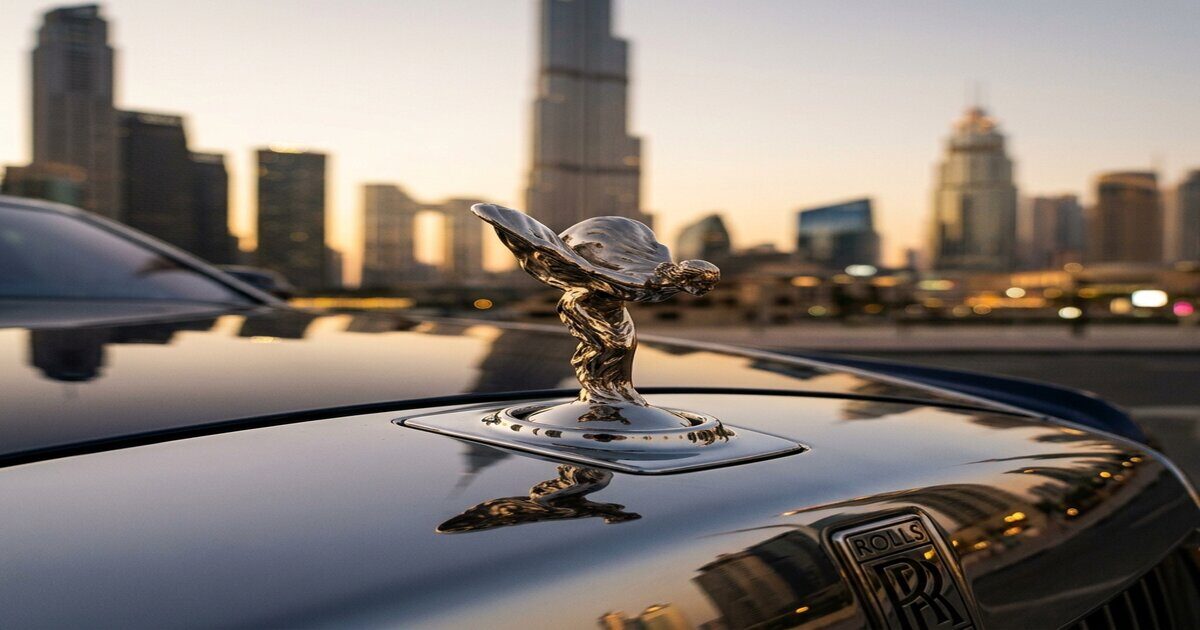
By the 1990s, Rolls-Royce Motors — by then trading as Vickers plc — was for sale, and the resulting contest remains one of the stranger footnotes in automotive history. Volkswagen expected to win outright: it offered £430 million in 1998 and secured the Crewe factory, the tooling, and the Bentley marque along with it. What Volkswagen's negotiators apparently overlooked was that the Rolls-Royce name and the Spirit of Ecstasy badge were never Vickers' to sell. Both had been licensed from Rolls-Royce plc — the aerospace company, still the trademark's true owner since the 1973 split. BMW, which already supplied engines to Rolls-Royce cars and held a standing relationship with the aerospace side, quietly bought the naming rights for a reported £40 million. Volkswagen woke up with a factory and no name to put on it.
The two companies negotiated a transition period rather than a clean handover: Volkswagen kept manufacturing rights to the Silver Seraph under the Rolls-Royce name until the end of 2002, while BMW built an entirely new factory from scratch, on a 42-acre site outside Chichester, to be ready the moment the licence transferred. On 1 January 2003, the new Rolls-Royce Motor Cars Limited — 100% owned by BMW AG — opened its doors at Goodwood, and Volkswagen kept Bentley and the Crewe works it had actually paid for. It is, depending on how you view German industrial rivalry, either a masterstroke or a very expensive lesson in reading the fine print.
Goodwood: What BMW's Money Actually Built
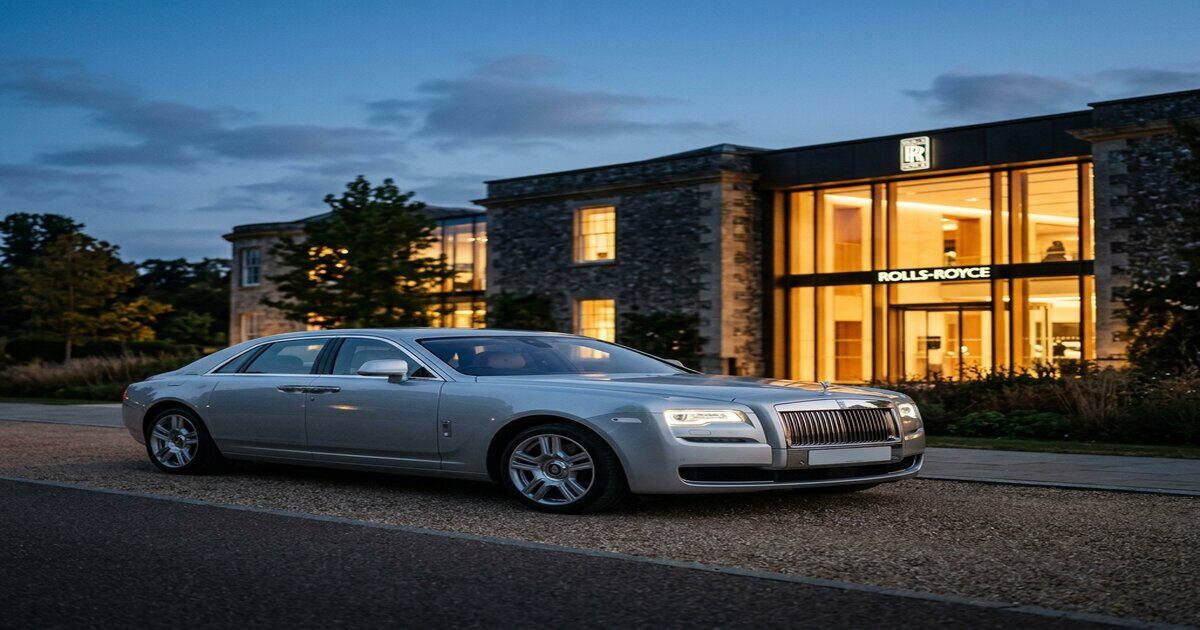
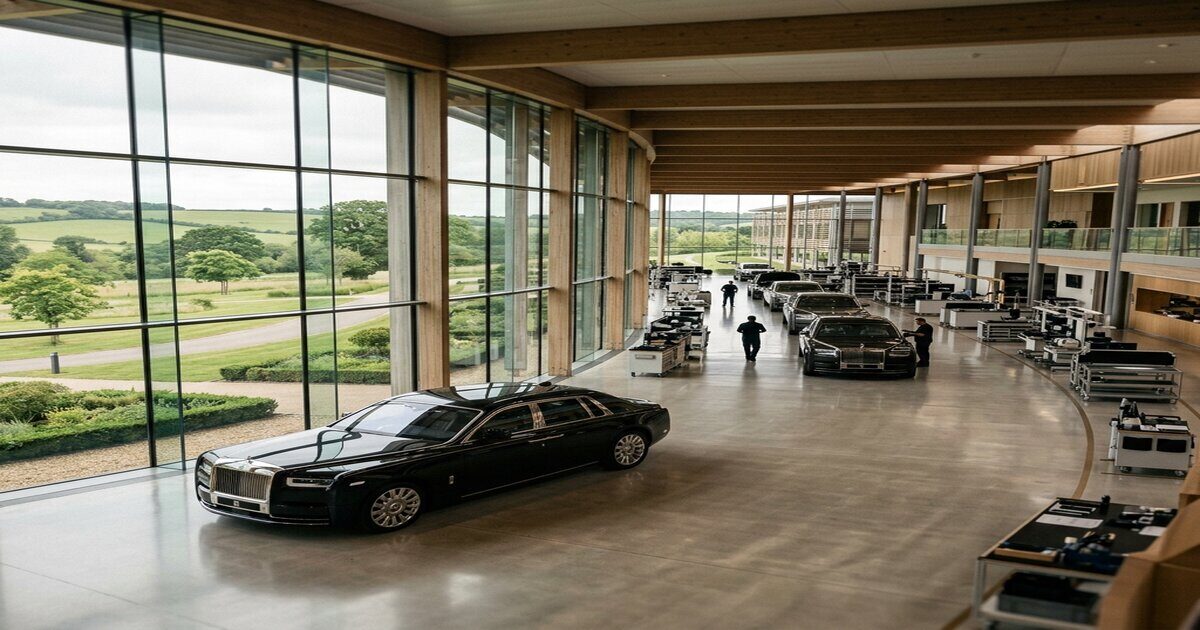
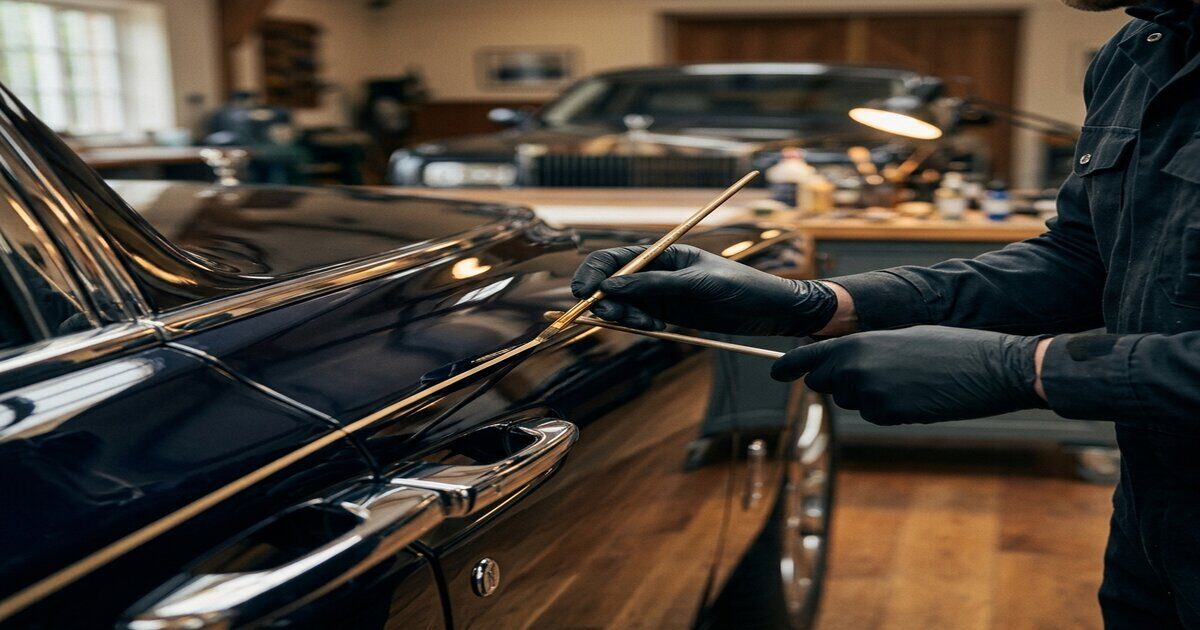
The Goodwood plant is not a repurposed factory floor with a new sign above the door. Designed by the architect Sir Nicholas Grimshaw, it sits half-buried into the West Sussex hillside beneath a living roof of sedum and wildflowers, arranged so that from the air it disappears into the estate around it — a deliberate piece of restraint from a company that could easily have built a monument to itself instead. Production has never chased volume: Goodwood builds a few thousand cars a year, by hand, in a facility designed around craftsmen rather than the other way round. It is the only site on earth where a Phantom, Ghost, Cullinan, Wraith, Dawn, or the fully electric Spectre is assembled, which is worth knowing next time someone tells you a Rolls-Royce is 'basically a BMW in a party dress.' It is not. BMW supplies capital, some underlying engineering platforms, and iron discipline over quality. Goodwood supplies everything a client is actually paying for.
1998: BMW acquires the rights to the Rolls-Royce name and logo for a reported £40 million, separate from Vickers' factory sale to Volkswagen.
2003: Rolls-Royce Motor Cars Limited opens at Goodwood, wholly owned by BMW AG, and the Phantom VII becomes the first car built there.
2011: The Ghost arrives, the marque's first genuinely smaller-series car, widening the buyer base beyond Phantom-only clientele.
2018: The Cullinan launches as the brand's first SUV, instantly becoming one of the most requested rentals in Dubai.
2023: The Spectre debuts as Rolls-Royce's first series-production electric car, with BMW committing to a fully electric range by 2030.
Who Actually Owns the Rolls-Royce Car Company Today?
Strip away the history and the present answer is almost anticlimactic in its simplicity: Rolls-Royce Motor Cars Limited is a wholly owned subsidiary of BMW AG, reporting through BMW's group accounts rather than trading its own shares anywhere. There is no public stock to buy, no minority shareholder to lobby, and no ambiguity about who signs off the annual model plan — it happens in Munich, then gets executed at Goodwood with what BMW itself has always described as complete design and engineering autonomy from the rest of the BMW range. That separation is not diplomatic courtesy; it is the entire commercial logic of the acquisition. A Rolls-Royce that felt like an expensive BMW would be worth considerably less than one that does not.
The Company You Are Not Renting From: Rolls-Royce Holdings plc
Meanwhile, Rolls-Royce Holdings plc — the aerospace descendant of that 1971 collapse — builds the Trent engines that power Emirates' and Etihad's long-haul fleets, among others, and has precisely nothing to do with the car you book through a chauffeur service. It pays no dividend on Cullinan sales, has no say over Goodwood's paint options, and its shareholders would likely be surprised how often the two companies are confused in casual conversation. The confusion is understandable — they share a name, a badge lineage, and a founding pair of Englishmen — but the ownership, balance sheets, and boardrooms have been entirely separate for over half a century.
The Future BMW Has Already Committed To
Ownership is not only a history question; it is a forward-looking one, and BMW has been unusually specific about where it is taking the marque. In 2021, Rolls-Royce's leadership publicly committed to a fully electric line-up by 2030 — no plug-in hybrids as a halfway measure, no combustion holdouts for the purists. The Spectre, launched in 2023, was the first proof that the commitment was real rather than aspirational: a two-door grand tourer producing 577 horsepower from twin electric motors, a 520-kilometre range, and the same Magic Carpet Ride air suspension that has defined the brand since the air-sprung Phantoms of the 2000s.
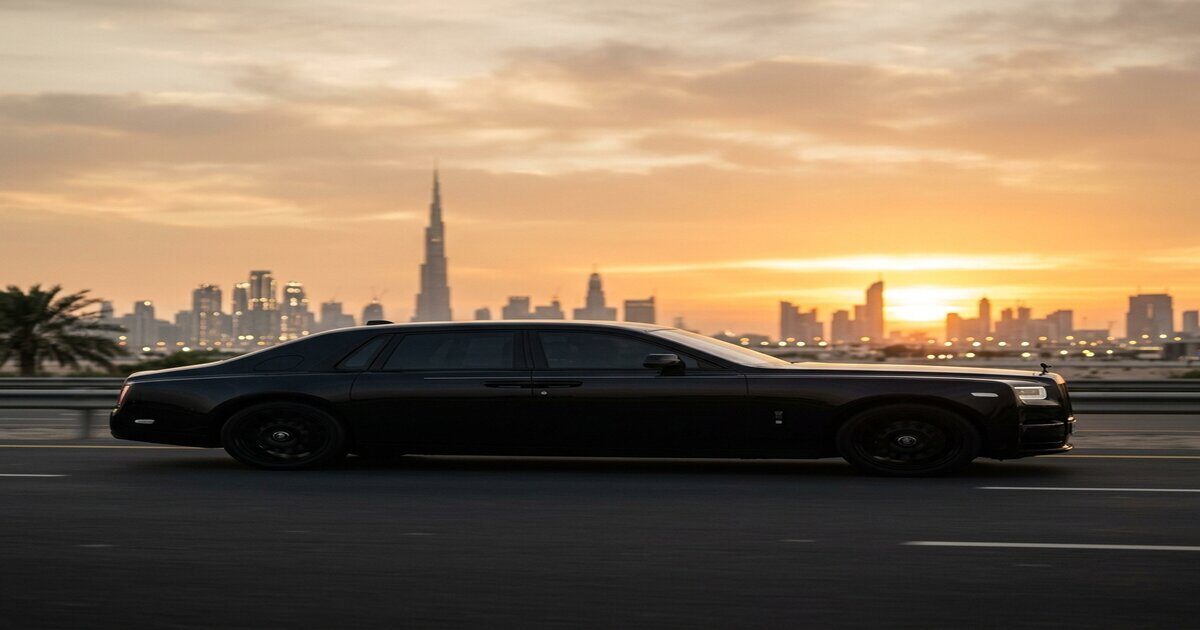
Dubai, rather fittingly, is one of the markets where that future is already on the road rather than in a press release. We keep an electric Rolls-Royce in the current fleet at Naqra FZE, and the requests for it — for a discreet arrival at a DIFC gala, for a Palm Jumeirah photoshoot, for a silent glide down Sheikh Zayed Road at the exact moment the sun drops behind the skyline — have overtaken almost every combustion model except the Cullinan. Rentals for the Spectre begin at AED 7,500 per day; the wider fleet, including the Ghost, starts from AED 3,800 per day.
What the Ownership Structure Actually Means When You Book
None of this corporate archaeology should matter to a guest arriving at the fleet page to book a car for a wedding at a Palm Jumeirah resort or a chauffeur-driven week of DIFC meetings — and, in the practical sense, it does not. What it explains is why the car behaves the way it does: why the options list is shorter and more considered than a German saloon's, why the waiting list for a bespoke commission runs into months rather than weeks, and why a marque owned outright by one of the world's most disciplined manufacturers still manages to feel entirely, stubbornly, its own thing. The Phantom rental you step into after a long-haul arrival at DXB is built to a standard set in Munich boardrooms and executed by hands in West Sussex — and somewhere in that combination is the entire explanation for why nobody has ever managed to build a convincing rival.
The company changed owners twice in a century. The way it feels to arrive in one has not changed at all.
Rolls-Royce Motor Cars Limited, the company that builds the cars, has been a wholly owned subsidiary of Germany's BMW AG since 2003. BMW acquired the rights to the Rolls-Royce name and logo in 1998 and opened the Goodwood factory in West Sussex, England, to build every car under that ownership from 2003 onward.
Is Rolls-Royce the same company as the jet engine maker?
No. Rolls-Royce Holdings plc, the aerospace company listed on the London Stock Exchange, has had no ownership connection to the car business since the 1973 split that followed the 1971 RB211 bankruptcy. Rolls-Royce Motor Cars, owned by BMW, and Rolls-Royce Holdings, the jet-engine maker, are entirely separate companies that happen to share a name and heritage.
When exactly did BMW take over Rolls-Royce?
BMW secured the naming rights in 1998 but did not begin production under its own ownership until 1 January 2003, once the new Goodwood plant was complete and a transition agreement with Volkswagen — which had separately purchased the Crewe factory — expired.
Why did Volkswagen not end up owning Rolls-Royce cars?
Volkswagen bought Vickers plc's car-making assets, including the Crewe factory and the Bentley marque, for £430 million in 1998. It assumed the Rolls-Royce name came with the deal, but the name and badge were licensed from Rolls-Royce plc, the aerospace company, which sold those specific rights to BMW instead.
Where are Rolls-Royce cars made now, and will that change?
Every Rolls-Royce — Phantom, Ghost, Cullinan, Dawn, Wraith, and the electric Spectre — is still hand-built exclusively at the Goodwood plant in West Sussex, England. BMW has given no indication of moving production elsewhere; its stated 2030 electrification target concerns the powertrain in each car, not the location where it is built.
Share this article
About the Author
Ahmed Salem is a luxury automotive expert with extensive experience in Dubai's premium car rental market. Passionate about delivering exceptional experiences through the world's finest automobiles.