Guides
Is Rolls-Royce German? Untangling the BMW Ownership Myth
Ahmed Salem••15 min read
Quick Answer
No, Rolls-Royce is not a German car, but it is owned by a German parent company. Since 2003, Rolls-Royce Motor Cars has been a wholly-owned subsidiary of BMW AG. However, every single Rolls-Royce motor car (including the Phantom, Ghost, Cullinan, and Spectre) is designed, engineered, and hand-built at the Home of Rolls-Royce in Goodwood, West Sussex, England. The brand remains quintessentially British in its craftsmanship, heritage, and identity, despite its German corporate backing.
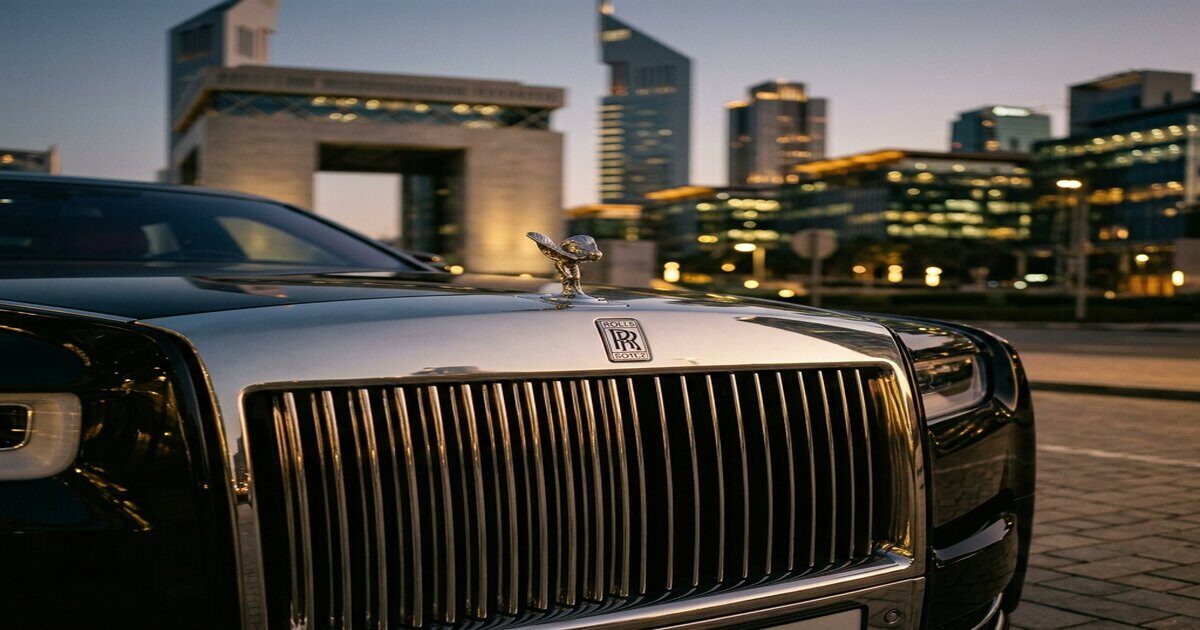
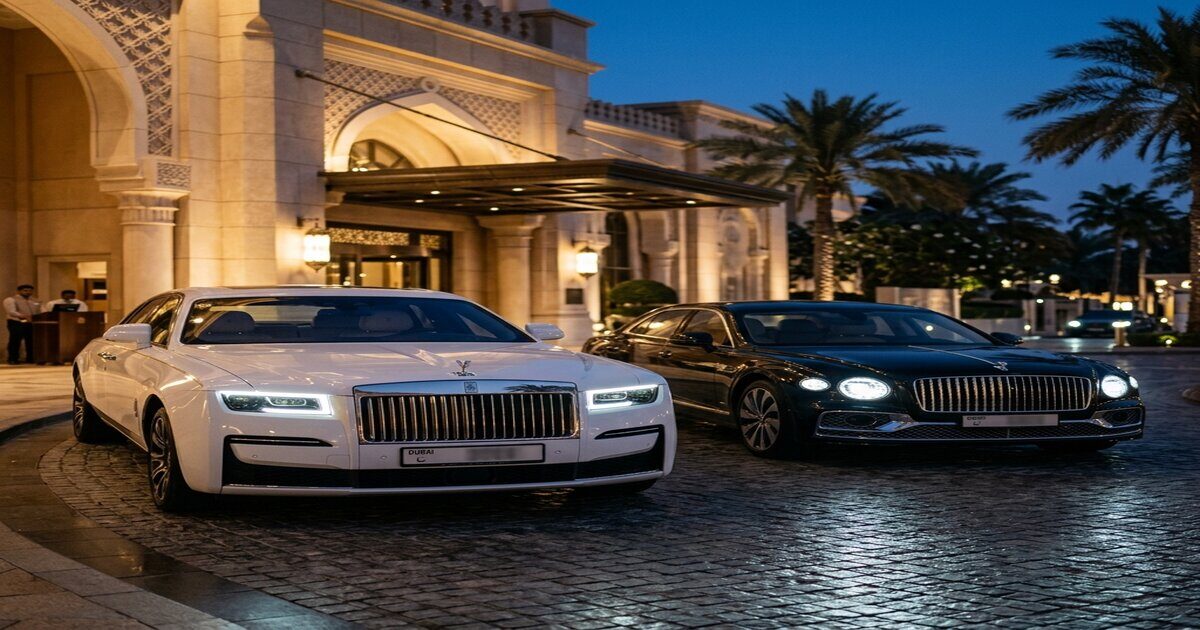
When a Rolls-Royce glides past the luxury boutiques of the Downtown Dubai Boulevard, circles the grand fountain of the Museum of the Future, or parks outside the iconic sail-shaped Burj Al Arab, it commands a level of respect that no other automobile on Earth can replicate. For decades, the name Rolls-Royce has stood as the ultimate symbol of British aristocratic luxury. Yet, a persistent question remains among automotive enthusiasts and high-net-worth clients renting these masterpieces at Naqra FZE in Dubai: Is Rolls-Royce British or German? To answer this question, one must look beyond the gleaming chrome Spirit of Ecstasy on the hood and delve into the complex, dramatic corporate history that saved the brand from obscurity. If you want to know more about the background, check out our guide on who owns Rolls-Royce.
The confusion surrounding the nationality of Rolls-Royce stems from the modern globalized automotive landscape, where historic heritage is frequently paired with foreign investment. To understand the current status of the marque, we must separate the company's physical operations, its engineering DNA, and its financial backing. While the money and structural platforms flow from Munich, the heart, soul, and physical manufacturing of the cars remain firmly rooted in the rolling green hills of the English countryside. For anyone driving a Rolls-Royce Cullinan or a Bespoke Rolls-Royce Ghost on the multi-lane highways of the UAE, this blend of British artistry and German engineering is the secret behind the car's unrivaled road presence and mechanical reliability. In fact, without this international synergy, the Rolls-Royce we know today—combining old-world luxury with modern reliability—might not exist at all.
The Dramatic History: How BMW Acquired the Crown Jewel
The story of Rolls-Royce's modern era is one of corporate intrigue, legal loopholes, and a legendary bidding war. In the late 1990s, the British conglomerate Vickers decided to sell Rolls-Royce Motors, which at the time included both the Rolls-Royce and Bentley brands. The logical buyer seemed to be BMW, which already supplied advanced V8 and V12 engines and other mechanical components for the Rolls-Royce Silver Seraph and Bentley Arnage. BMW was prepared to purchase the company, but Volkswagen Group intervened with a massive, unexpected bid of £430 million, easily outbidding BMW's offer of £340 million. Volkswagen successfully purchased the historic Crewe factory, the manufacturing designs, and the rights to the Bentley brand, assuming they had won the ultimate prize. If you are curious about how this split happened and how the Bentley side of the family was affected, you can read our deep dive on who [owns Bentley and Rolls-Royce](/blog/owns-bentley-rolls-royce-ownership-split-explained). This division of assets remains one of the most critical turning points in modern automotive history. If you are curious about how this split happened and how the Bentley side of the family was affected, you can read our deep dive on who owns Bentley and Rolls-Royce. This division of assets remains one of the most critical turning points in modern automotive history.
However, in a masterstroke of legal maneuvering, BMW bypassed the factory sale entirely. They discovered that the Rolls-Royce brand name and the famous double-R logo were actually owned and controlled by Rolls-Royce plc, the separate aerospace and aviation engine company that had been nationalized in 1971. Because BMW had a joint venture with Rolls-Royce plc to build jet engines, they had a strong relationship with the aviation board. BMW quietly purchased the exclusive rights to the Rolls-Royce name and the Spirit of Ecstasy trademark for a mere £40 million. This created a fascinating stalemate: Volkswagen owned the physical factory and Bentley, but could not build cars named Rolls-Royce. BMW owned the Rolls-Royce brand but had no factory, designs, or workforce. It was a corporate checkmate that forced both companies to negotiate.
Eventually, a sensible deal was negotiated between the two German giants. Volkswagen agreed to continue building Rolls-Royce cars at the Crewe factory until the end of 2002, allowing BMW time to build a brand-new home for the marque. On January 1, 2003, the transition was complete: Volkswagen kept Bentley and the Crewe facility, while BMW assumed full control of the Rolls-Royce brand. BMW used this transition period to establish a state-of-the-art facility in Goodwood, West Sussex, ensuring that the new era of Rolls-Royce would begin with a clean sheet of paper, completely free from the limitations of legacy manufacturing plants. This move effectively saved Rolls-Royce, giving it a dedicated home that honored its British heritage while being backed by German capital.
The British Soul: Hand-Built in Goodwood, England
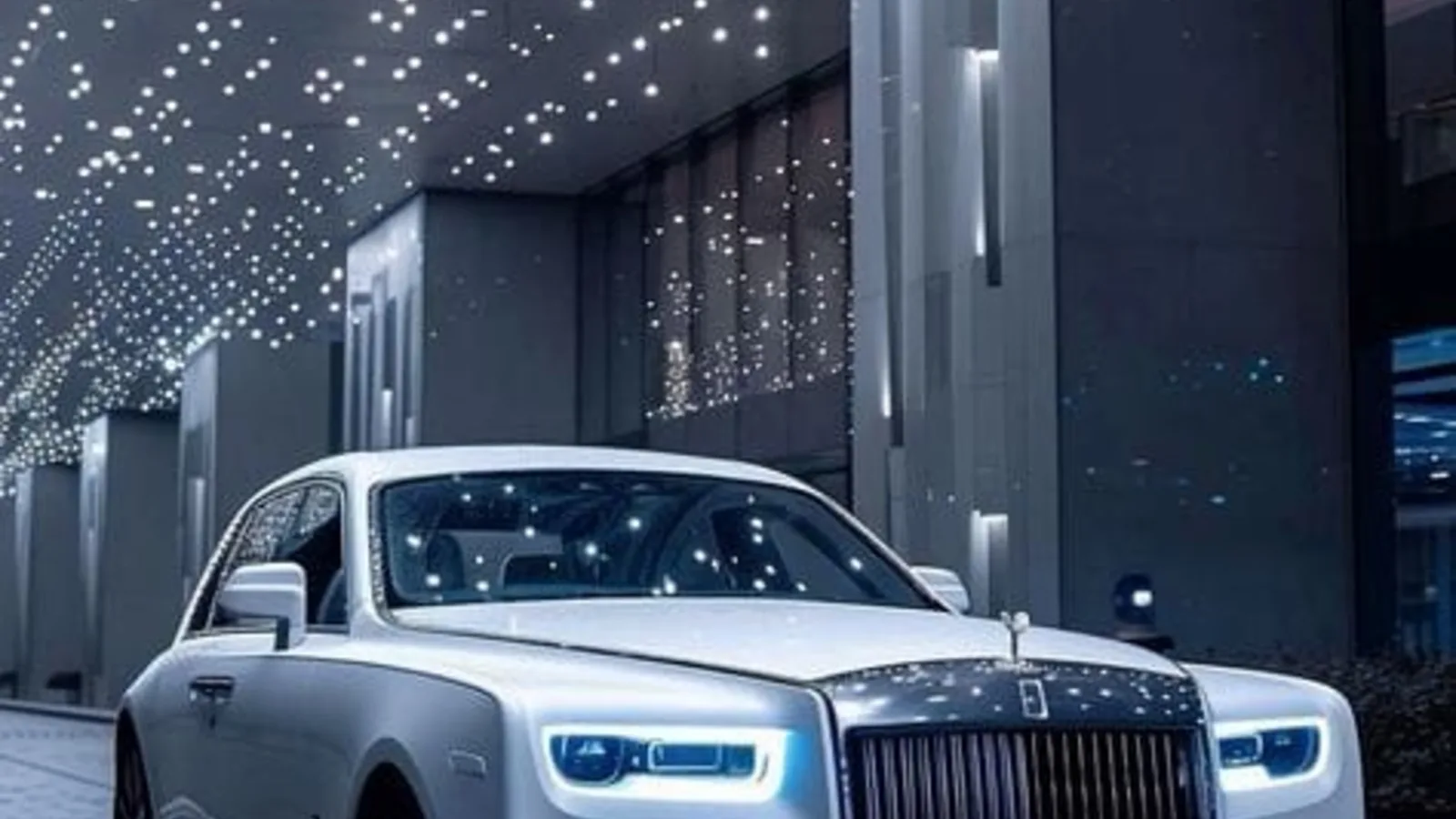
Despite its German parent company, Rolls-Royce is fundamentally British. Every Phantom, Ghost, Cullinan, and Spectre is manufactured in Goodwood, England. The facility was designed by the acclaimed architect Sir Nicholas Grimshaw and blends seamlessly into the West Sussex countryside. It is not an assembly line in the traditional sense; it is a center of craftsmanship where master artisans spend hundreds of hours hand-crafting the wood veneers, hand-stitching the leather hides, and hand-polishing the paintwork of each individual vehicle. The plant is built with an eco-friendly living roof and massive glass walls, allowing natural light to flood the workshop where the cars are meticulously put together.
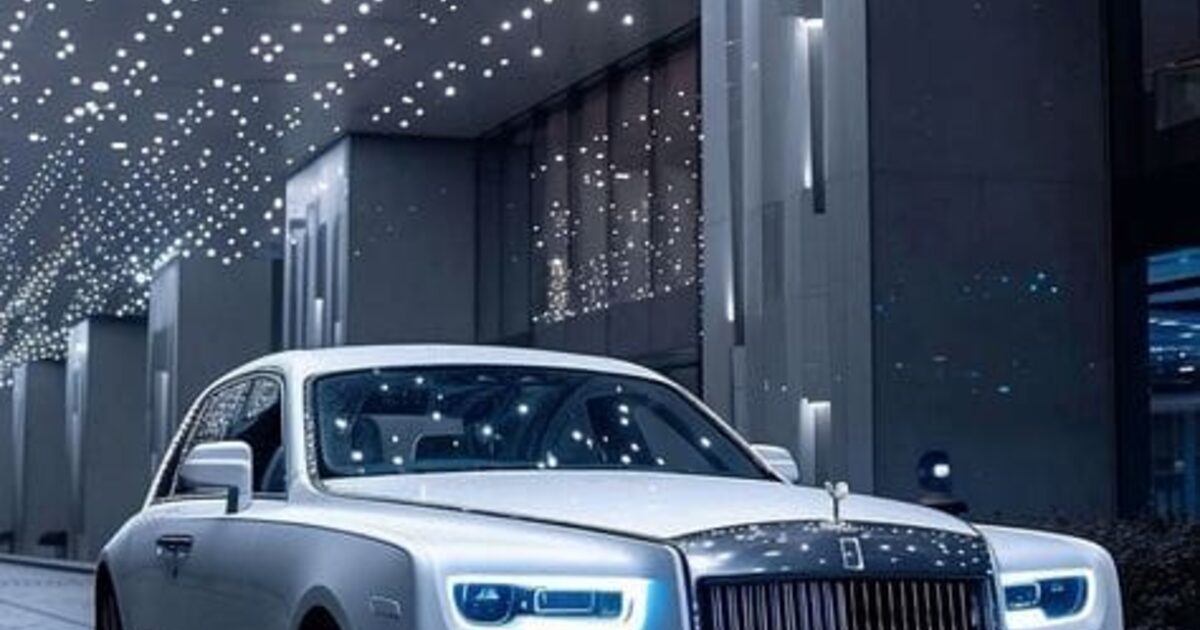
For our rental clients at Naqra FZE in Dubai, this means that the vehicle you are driving represents the peak of British artisanal luxury. The wood veneer in a Ghost is sourced from single logs to ensure perfect grain matching, and the leather comes from bulls raised in high-altitude Alpine regions where there are no barbed wire fences to scratch the hides. The dedication to detail is immense: it takes 17 days to build a Ghost, and up to 45 days to complete a Bespoke Phantom. This level of craftsmanship simply cannot be industrialized or outsourced to factories outside of England without losing the very soul of the brand. Every single detail, from the hand-painted coachline to the precision of the starlight headliner, is executed by dedicated specialists.
Furthermore, the workforce at Goodwood consists of highly skilled British craftsmen, designers, and engineers, many of whom come from generations of leatherworkers, carpenters, and coachbuilders. The Goodwood factory also features a dedicated Bespoke division, where customers from Dubai and across the globe can request custom elements such as gold-plated Spirit of Ecstasy figurines, customized embroidery, and starlight headliners that replicate the exact constellation on the night of their birth. This deep-rooted local talent is what preserves the British heritage and prestigious character of every car that leaves the plant. The company actively recruits from local craft guilds, ensuring that traditional British skills are preserved and passed down to future generations.
It is fascinating to note that the collaboration between Munich and Goodwood is built on the principles of complete aesthetic independence. German engineers focus solely on the mechanical and digital architecture, while British designers retain absolute freedom over the vehicle's styling and interior layout. This ensures that the classic, imposing silhouette of a Rolls-Royce remains instantly recognizable, whether you are cruising through the historic streets of London or valet parking at the Dubai Mall.
Every V12 engine is assembled in Germany but shipped to Goodwood for final calibration and installation onto the spaceframe. This process requires absolute precision, as the powerplant must operate in near-total silence. Naqra FZE clients frequently comment that starting a Rolls-Royce reveals zero cabin vibration, a direct benefit of the rigorous quality control and tolerance standards implemented by Munich's engineers.
The German Brains: BMW's Engineering and Quality Assurance
While the soul of Rolls-Royce remains British, its corporate backing and engineering backbone are transitionally German. BMW Group brought financial stability, global logistics, and world-class engineering standards to a brand that had historically struggled with reliability. The introduction of BMW's twin-turbocharged V12 engine and advanced electronic architectures transformed Rolls-Royce cars from beautiful but temperamental carriages into highly reliable, technologically advanced machines. The legendary smooth power delivery of these V12 engines is a testament to BMW's world-leading engine design capabilities.
BMW's influence is most evident in the advanced infotainment systems, active safety features, and air suspension systems that give Rolls-Royce its legendary 'Magic Carpet Ride.' However, BMW is extremely careful to keep its parentage invisible. You will not find BMW badges or common BMW parts inside the cabin of a Cullinan or Phantom. Everything you touch, see, and smell is uniquely designed and crafted for Rolls-Royce. The German influence is felt not in the aesthetic, but in the flawless operation, the absolute lack of mechanical squeaks, and the durability of the vehicle's electrical and mechanical systems on hot Dubai summer days, where temperatures regularly exceed 45 degrees Celsius. The climate testing facilities in Munich are used to ensure the air conditioning can freeze the cabin even in the Sahara, which is vital for Middle Eastern clients.
Without BMW's massive investment, Rolls-Royce would not have had the resources to develop the Architecture of Luxury—the proprietary all-aluminum spaceframe platform that now underpins the Cullinan, Phantom, and Ghost. This platform was engineered specifically for Rolls-Royce and is not shared with any BMW-branded vehicles. It allows Rolls-Royce to maintain its unique proportions, high ride height, and acoustic isolation, proving that BMW treats Rolls-Royce as a distinct, highly respected entity rather than just a rebadged product. The integration of advanced multi-link suspension and active roll stabilization is another area where BMW's engineering prowess elevates the driving dynamics without compromising comfort.
Bespoke vs. Mass Production: A Brand Comparison
To understand the relationship between Rolls-Royce, BMW, and its historic sibling Bentley (now owned by Volkswagen), it is helpful to compare their manufacturing approaches. While BMW produces millions of vehicles globally, Rolls-Royce deliberately limits its production to around 6,000 cars per year to maintain exclusivity. This difference in scale allows Rolls-Royce to focus entirely on Bespoke customization, allowing clients to select from over 44,000 paint colors and custom interior configurations. Bentley, by comparison, produces roughly double the number of vehicles, positioning itself slightly closer to high-performance grand touring rather than the absolute pinnacle of luxury.
Here is a comparison of ownership, manufacturing, and positioning between these elite marques:
| Feature | Rolls-Royce | BMW | Bentley |
|---|---|---|---|
| Parent Company | BMW Group (Germany) | BMW AG (Germany) | Volkswagen Group (Germany) |
| Factory Location | Goodwood, England | Munich, Germany (etc.) | Crewe, England |
| Annual Production | ~6,000 units | ~2.5 million units | ~13,000 units |
| Bespoke Potential | Unlimited customization | Option packages | High customization (Mulliner) |
Why This Ownership Matters for Renting in Dubai
When you rent a Rolls-Royce from Naqra FZE in Dubai, the combination of British luxury and German engineering is exactly what makes the experience so satisfying. You get the romance, presence, and handcrafted beauty of a British motor car, backed by the flawless mechanical reliability and air-conditioning performance engineered by BMW. In the harsh environment of the UAE, where dust and heat test any luxury vehicle, our fleet of Rolls-Royces operates perfectly, allowing you to cruise from Dubai Marina to the Hatta mountains without a single worry. The level of comfort is consistent, the engine temperature remains stable, and the advanced suspension glides over road speed bumps with total composure.
Furthermore, because of BMW's long-term investment, Rolls-Royce has been able to pioneer new technologies, such as the all-electric Spectre. This ensures that the marque remains relevant and dominant in Dubai's forward-looking luxury landscape, where sustainable electric power is becoming just as prestigious as massive V12 engines. The modern Rolls-Royce is indeed the perfect marriage of British art and German science. When you step into the silent cabin, close the coach doors with the touch of a button, and glide onto the highway, you are experiencing the absolute zenith of global automotive collaboration. It is a vehicle that honors its glorious past while utilizing the very best of modern technological innovation.
Frequently Asked Questions
Is Rolls-Royce owned by a German company?
Yes, Rolls-Royce Motor Cars has been a wholly-owned subsidiary of the German BMW Group since 2003.
Are Rolls-Royce cars built in Germany?
No. Every Rolls-Royce car is designed, engineered, and hand-assembled at the Home of Rolls-Royce in Goodwood, West Sussex, England.
Does Rolls-Royce use BMW engines?
Yes, Rolls-Royce models use highly modified twin-turbocharged V12 engines developed by BMW, which are tuned specifically for Rolls-Royce's silent, low-end torque characteristics.
Who owns the Rolls-Royce aircraft engine company?
Rolls-Royce Holdings plc, a completely separate British aerospace and defense company, owns the aircraft engine manufacturing division. They share the logo and name but have no corporate relation to BMW's Rolls-Royce Motor Cars.
Which is more British: Rolls-Royce or Bentley?
Both are historic British brands now owned by German conglomerates (BMW owns Rolls-Royce, Volkswagen owns Bentley). However, both brands maintain their design and production facilities in England (Goodwood for Rolls-Royce, Crewe for Bentley).
Experience the perfect fusion of British artistry and German engineering on Dubai's streets. Contact Naqra FZE today to reserve your Ghost, Phantom, or Cullinan.
Book a Rolls-RoyceAs we look to the future, the partnership between Munich and Goodwood will continue to evolve, especially as the automotive world transitions to electrification. The engineering challenges of creating an electric vehicle that still delivers the signature 'Magic Carpet Ride' require the immense research and development resources of a global automotive giant like BMW. However, Rolls-Royce has ensured that the bespoke, handcrafted element of their vehicles remains untouched, preserving the unique British character that makes these motor cars so desirable for our clients in Dubai. Every vehicle will continue to be a rolling work of art, representing the absolute peak of automotive achievement.
About the Author
Ahmed Salem is a luxury automotive expert with extensive experience in Dubai's premium car rental market. Passionate about delivering exceptional experiences through the world's finest automobiles.